The Sacred Chronicle
The Story of Lord Ayyappa
The Origin
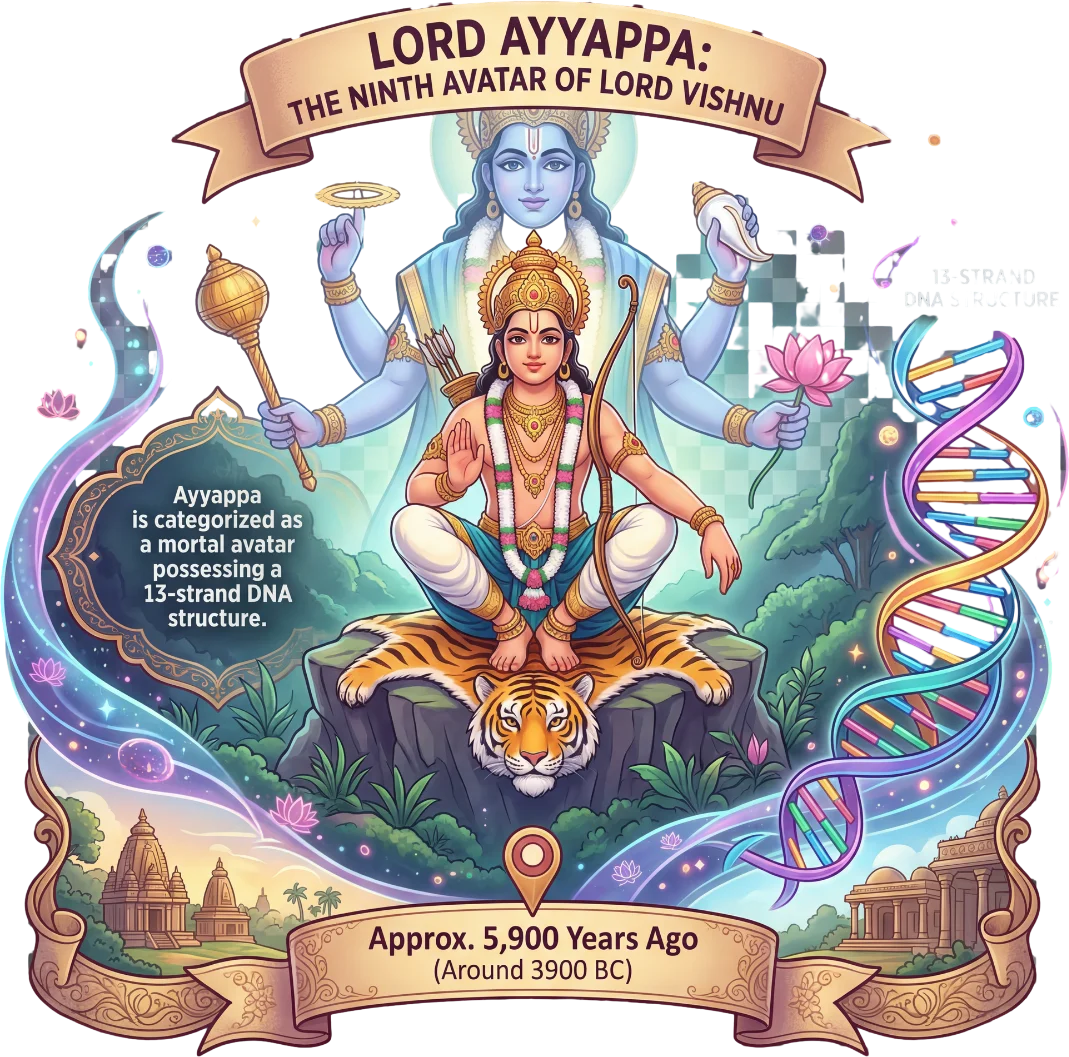
Lord Ayyappa, born as the Ninth Avatar of Lord Vishnu, lived approximately 5,900 years ago (around 3900 BC). Ayyappa is categorized as a mortal avatar possessing a 13-strand DNA structure.
The Discovery
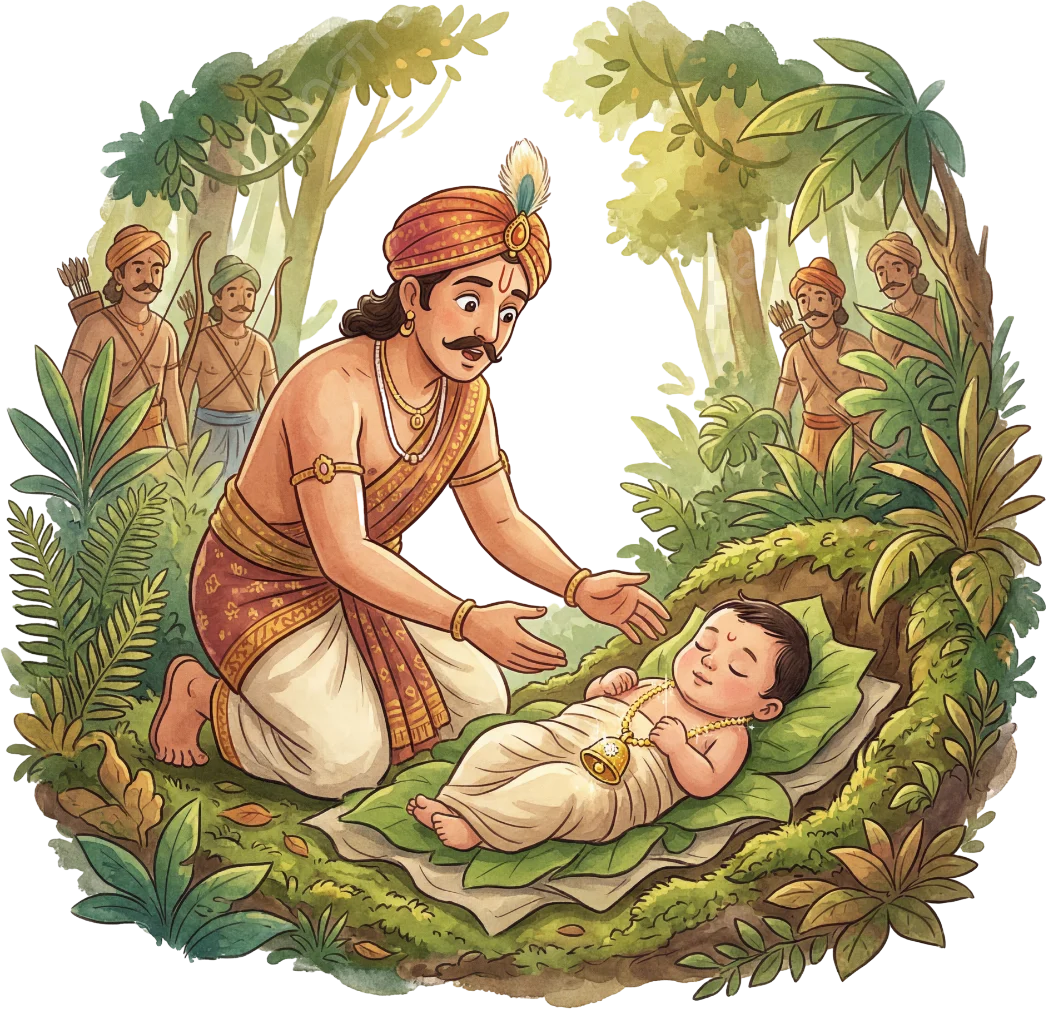
Ayyappa's life on Earth began when he was found as a handsome infant in the forest by his foster father, King Rajashekaran of Panthalam, during a hunting expedition. The infant was found wearing a golden chain with a large diamond (Mani) around his neck.
The Divine Sign
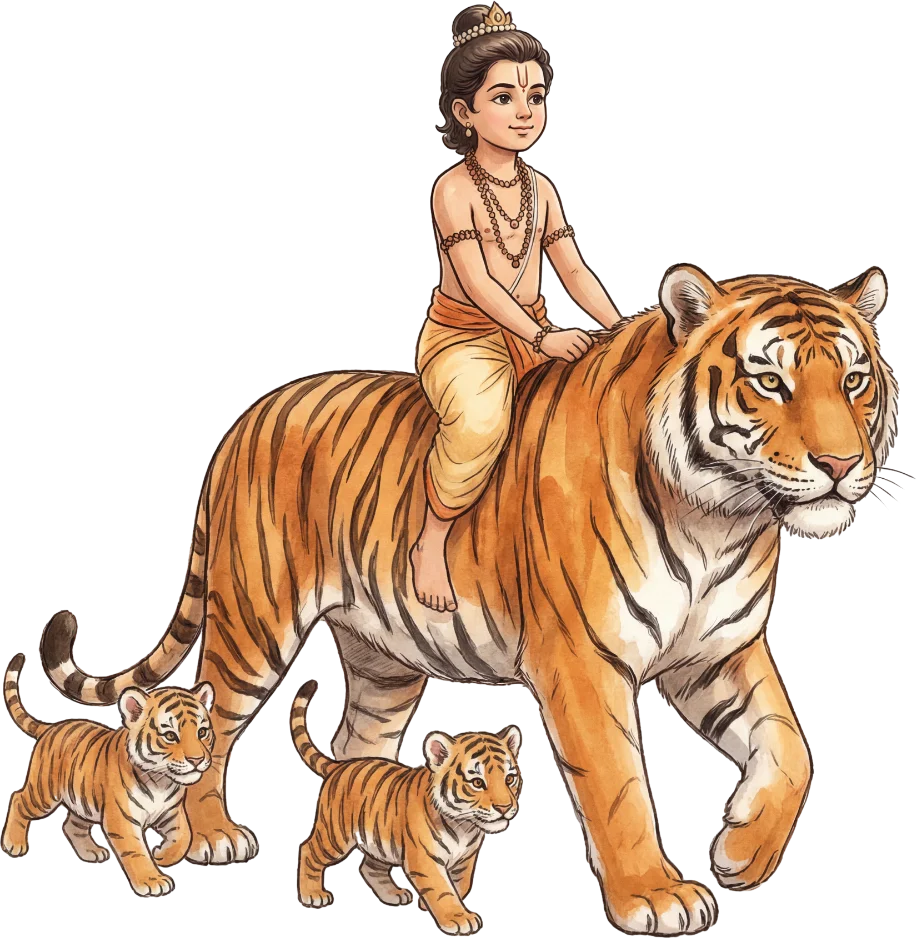
In a display of his divine nature, the young Ayyappa went into the forest and returned to the palace riding a massive mother tiger, followed by her cubs.
The Renunciation
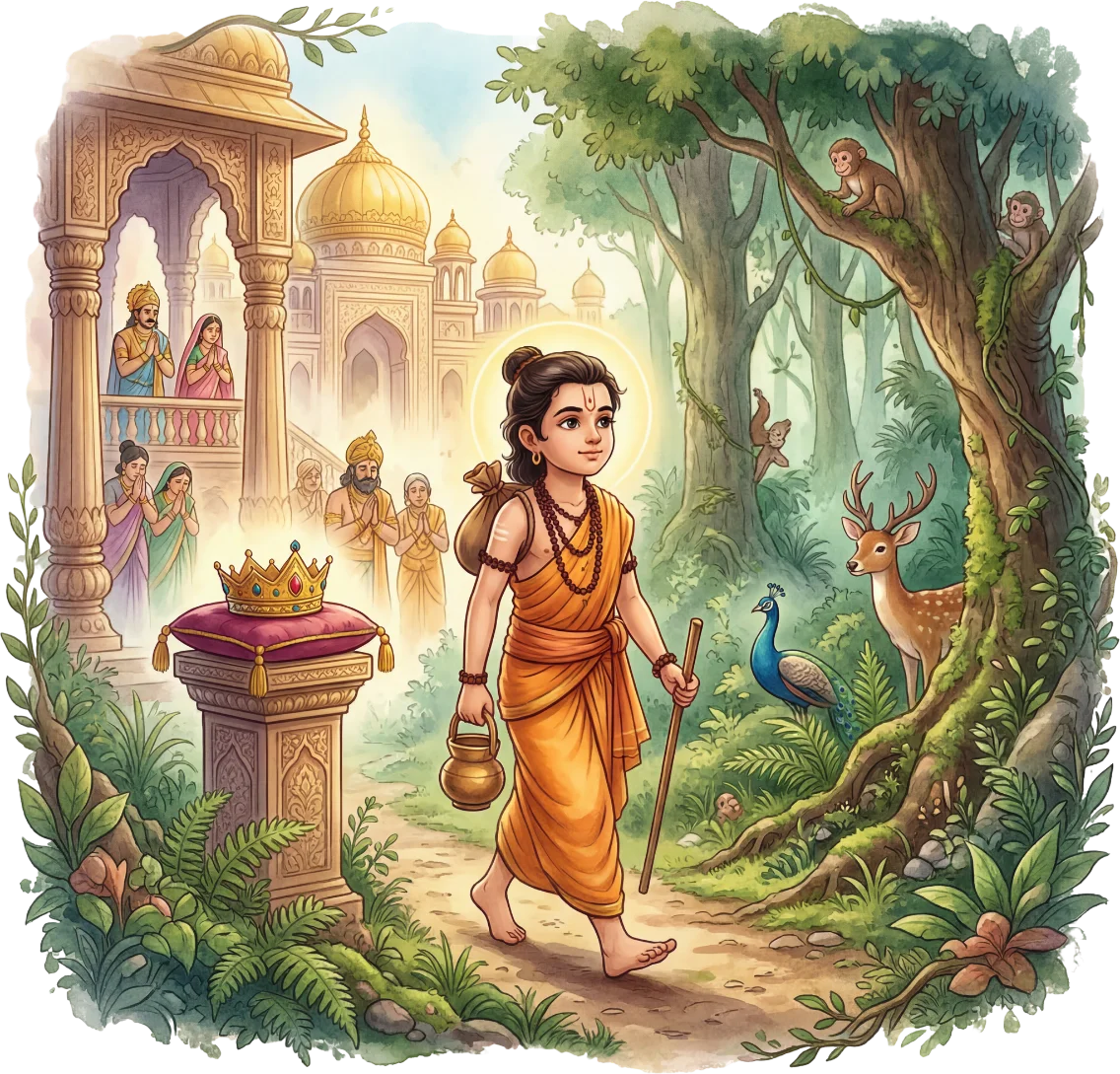
Young Ayyappa chose to sacrifice his royal future, and disappeared into the forest as a boy child and swore a vow of lifelong celibacy (Brahmacharya).
The Eastern Visitor
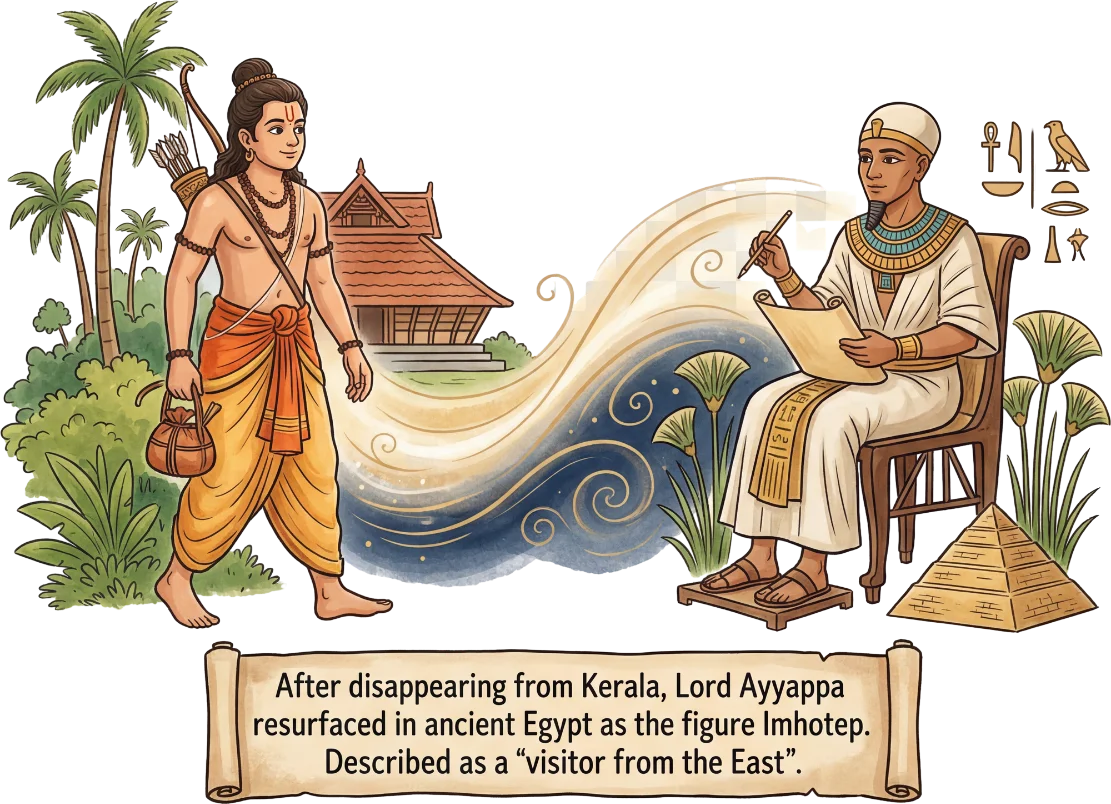
After disappearing from Kerala, Lord Ayyappa resurfaced in ancient Egypt as the figure Imhotep. Described as a 'Visitor from the East.'
The Grand Architect
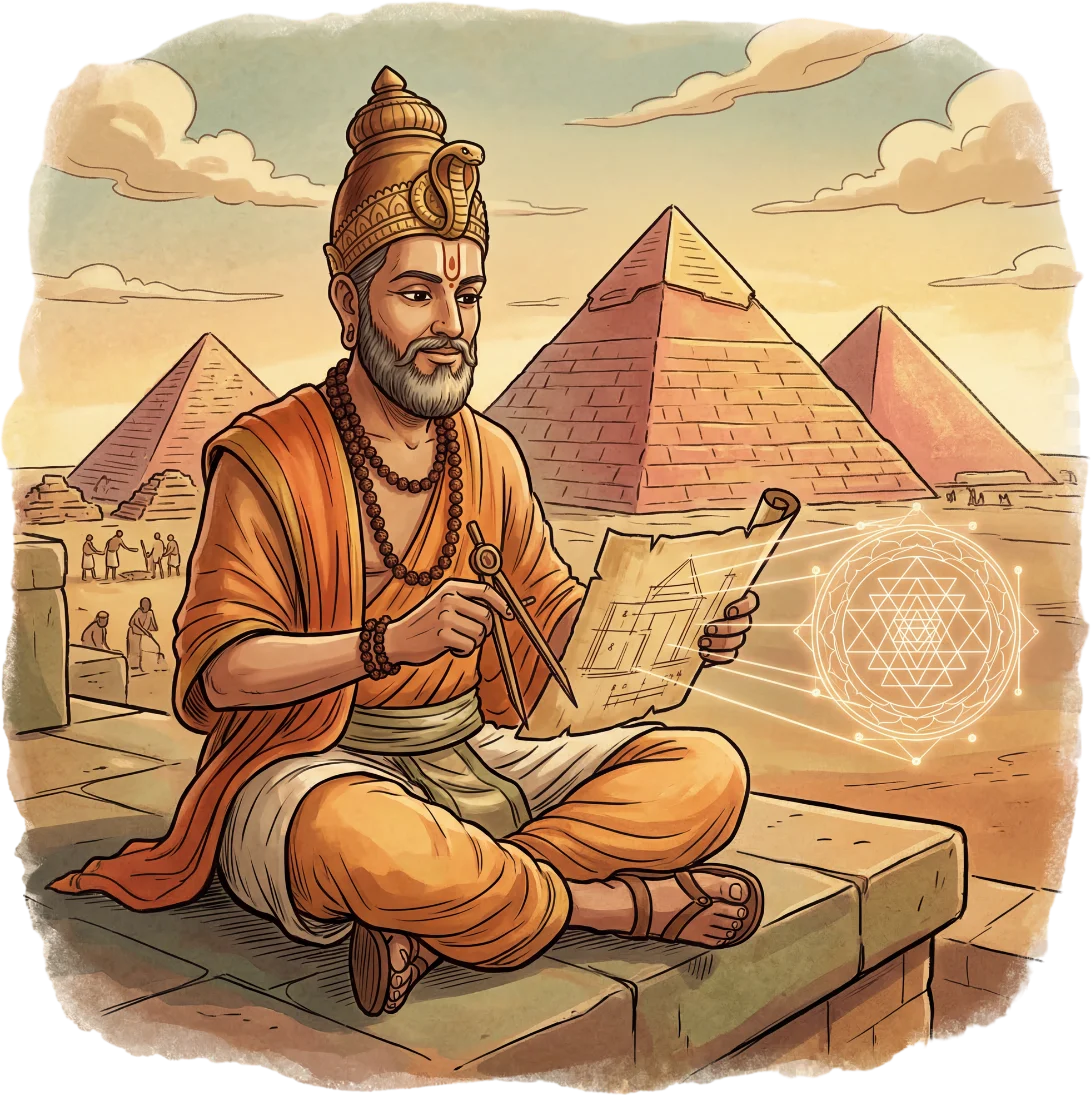
In his identity as Imhotep, Lord Ayyappa was a polymath who served as the Grandmaster Architect, credited with building the eight-sided Giza Pyramids 5,900 years ago using divine geometry (Sri Yantra).
The Sacred Symbol
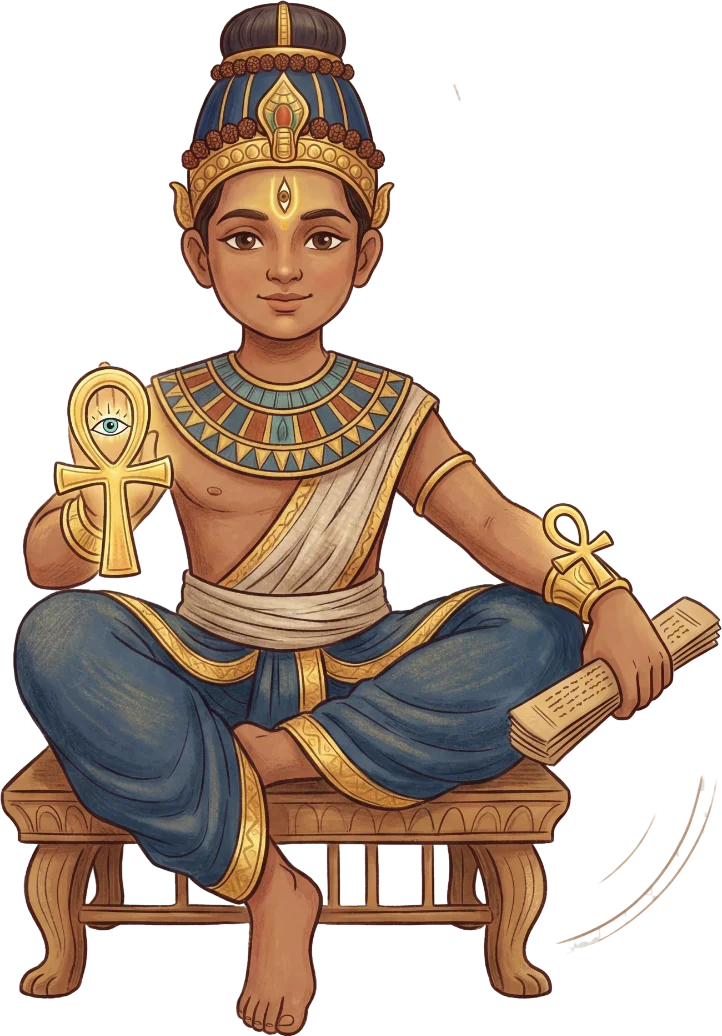
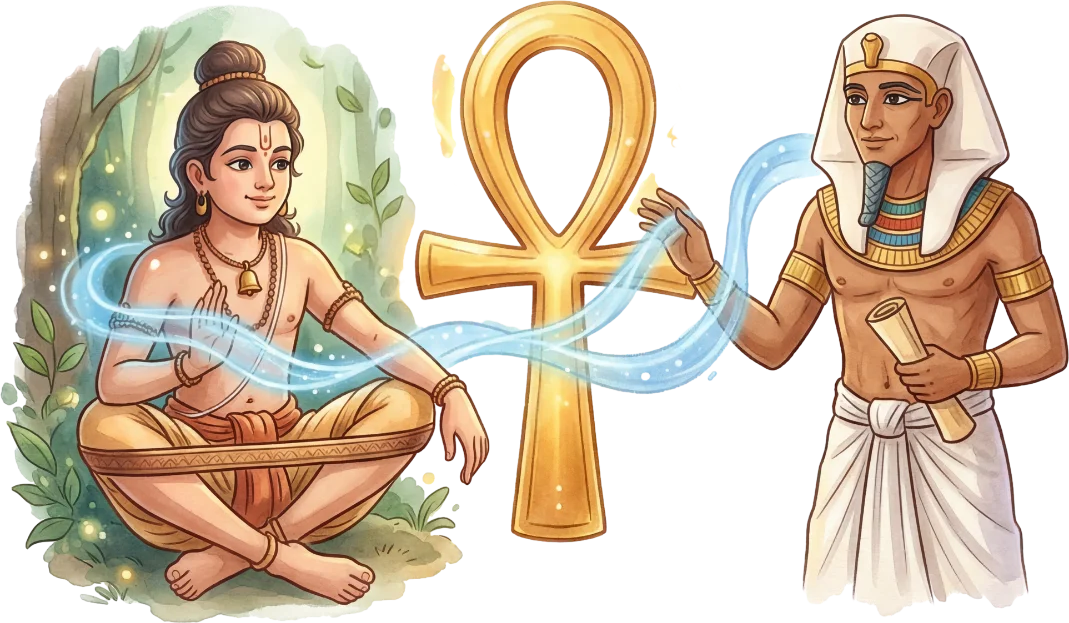
Lord Ayyappa as Imhotep carried a symbol on his wrist known as the Ankh (which means "eye" in Sanskrit), representing the "key of Mount Meru" or the third eye of Shiva.
The Sacred Shrine
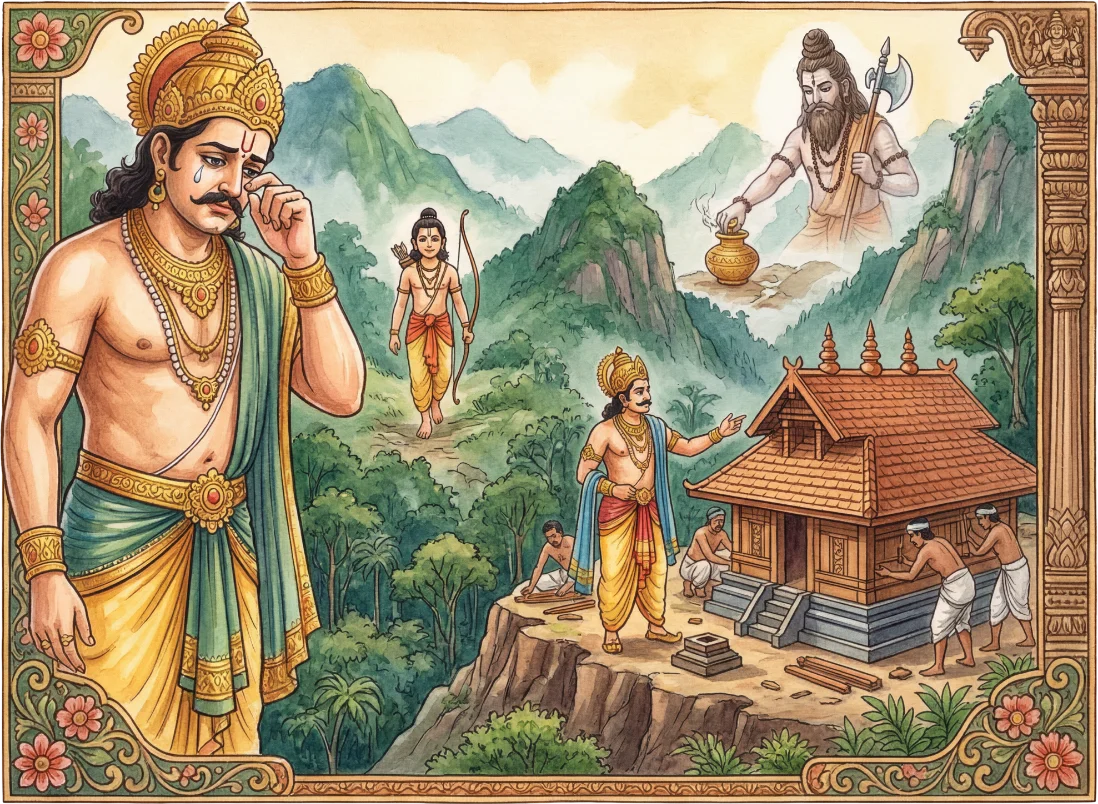
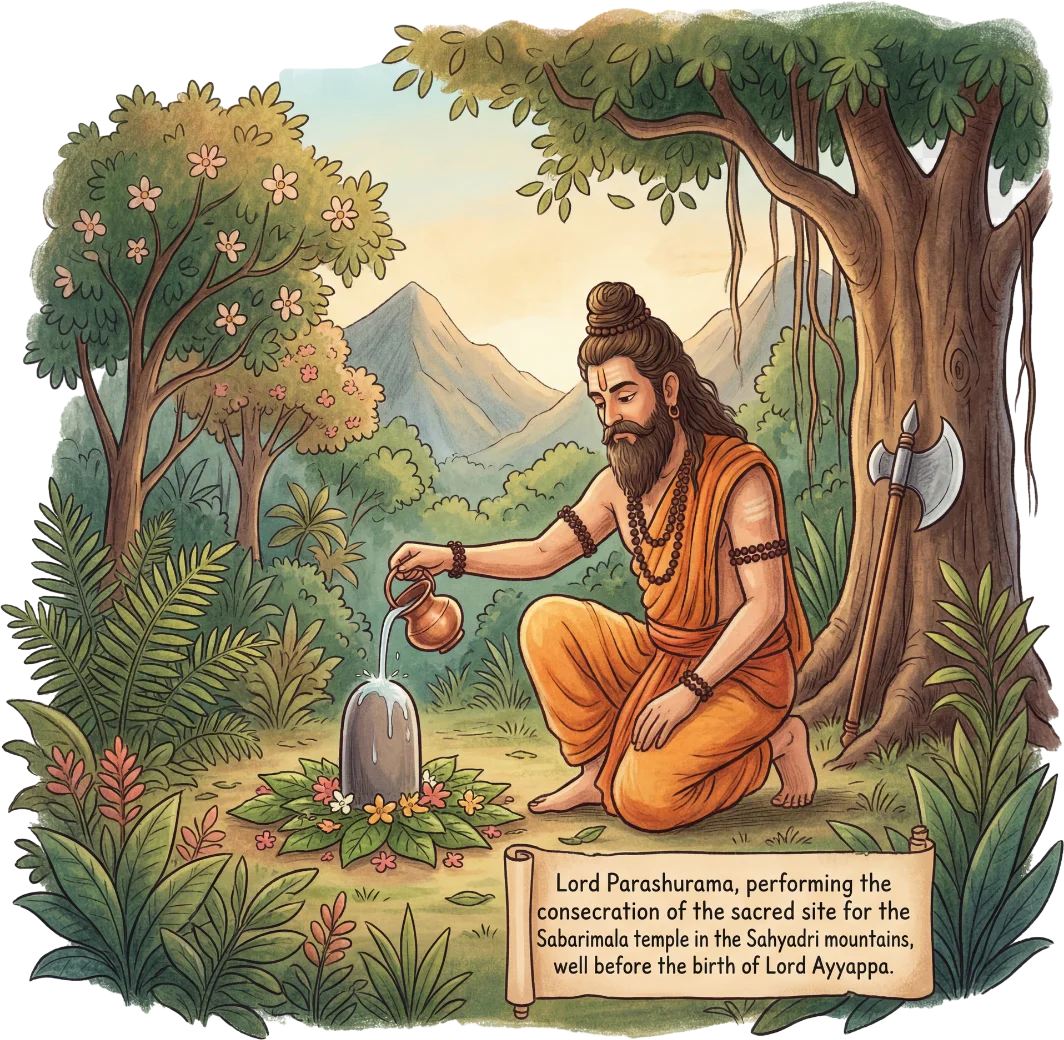
Distraught by Ayyappa's departure, King Rajashekaran constructed the Sabarimala temple at a location in the Sahyadri mountains that had been consecrated in advance by Lord Parashurama (the Sixth avatar of Vishnu).
The Pilgrimage
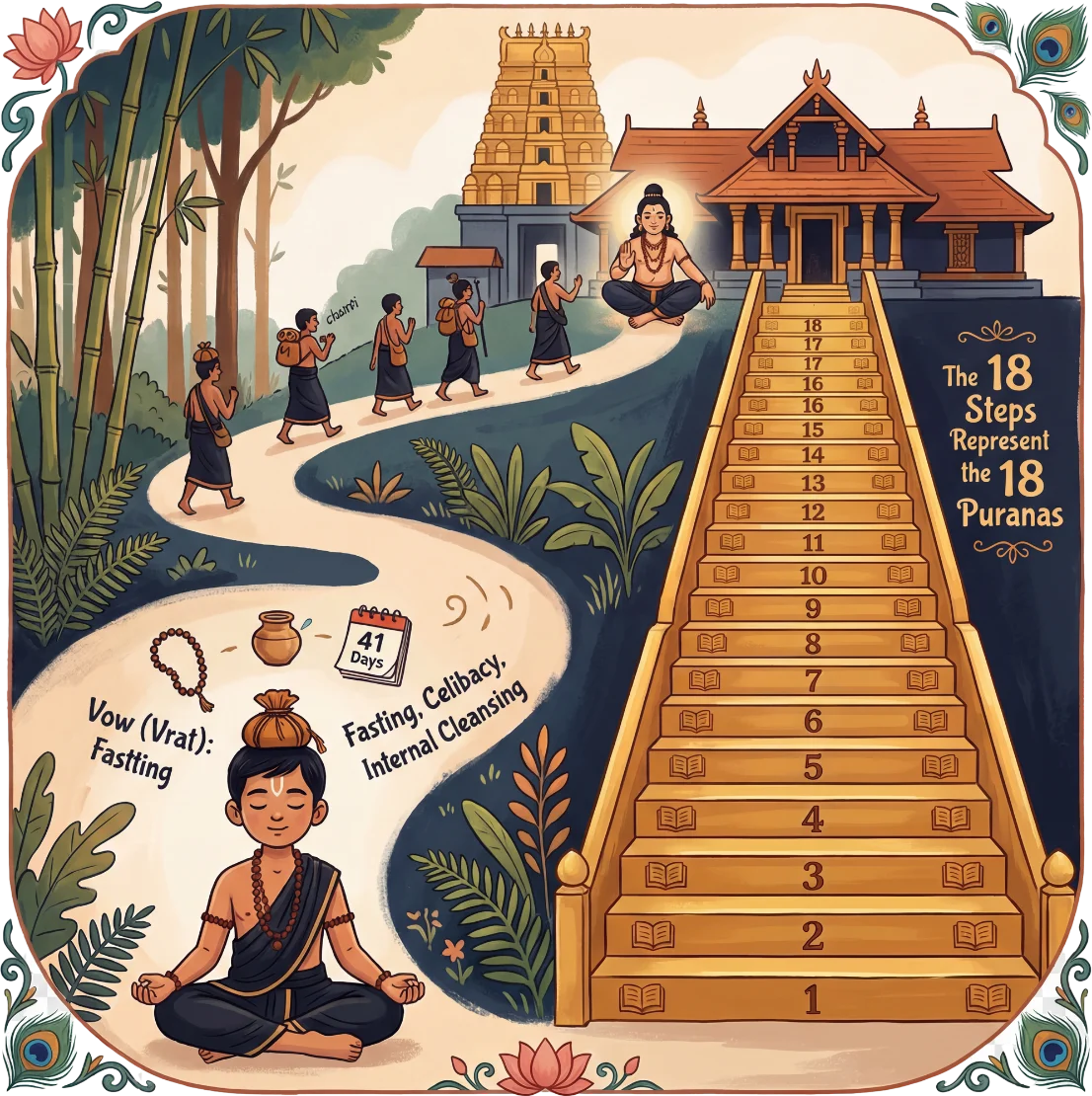
The Sabarimala pilgrimage remains a central part of Lord Ayyappa's legacy, characterized by a 41-day rigorous vow (vrat) of internal cleansing, fasting, and celibacy. The temple's 18 steps represent the 18 Puranas.
The Ankh Connection
The connection between Lord Ayyappa and the Ankh symbol is established through his identification as the ancient Egyptian figure Imhotep.
The Consecration
Lord Parashurama is responsible for the spiritual infrastructure of the region, having consecrated the specific spot in the Sahyadri mountains for the Sabarimala temple well in advance of Lord Ayyappa's birth.
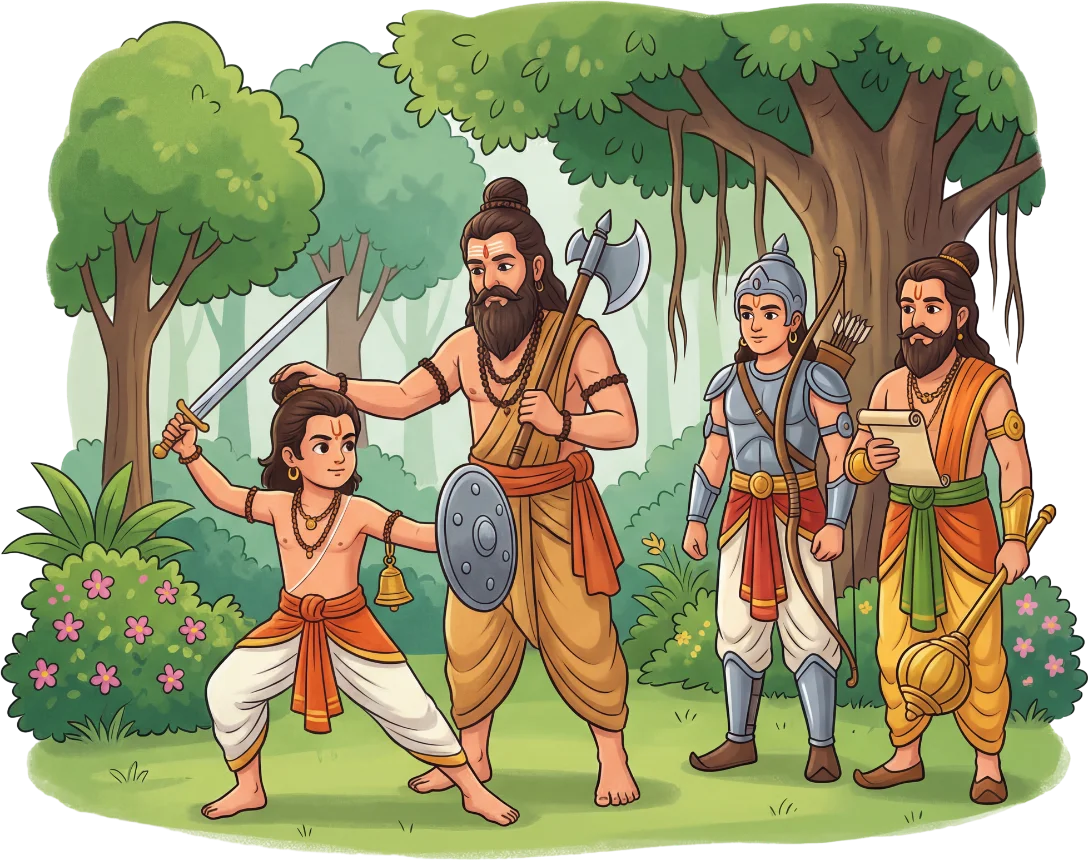
The Martial Guru
Lord Parashurama was the Guru to many stalwarts, including Bhishma and Drona, and is identified as the martial mentor of Lord Ayyappa.
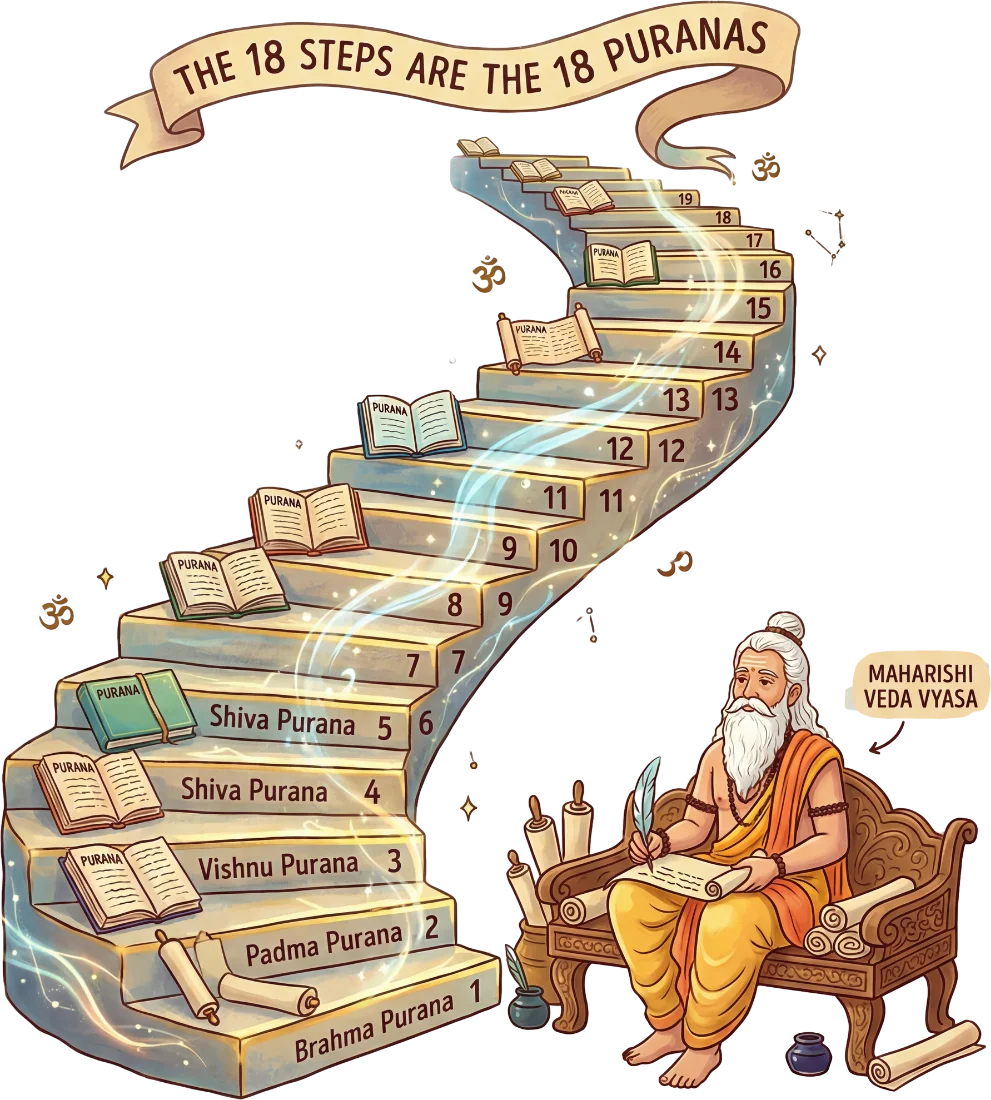
The 18 Puranas
The most fundamental meaning of the 18 steps is that they represent the 18 Puranas penned by Maharishi Veda Vyasa.
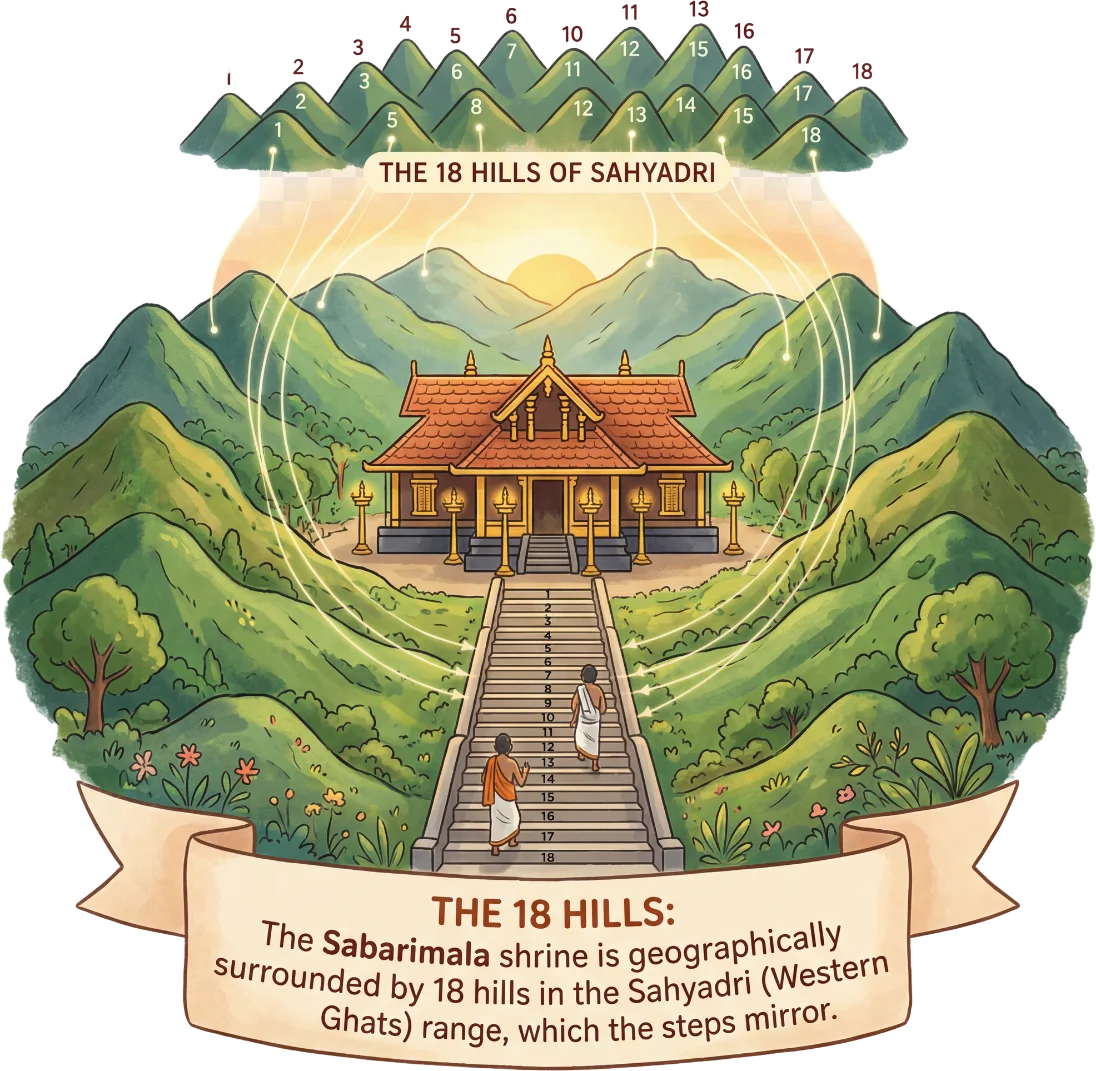
The 18 Hills
The Sabarimala shrine is geographically surrounded by 18 hills in the Sahyadri (Western Ghats) range, which the steps mirror.
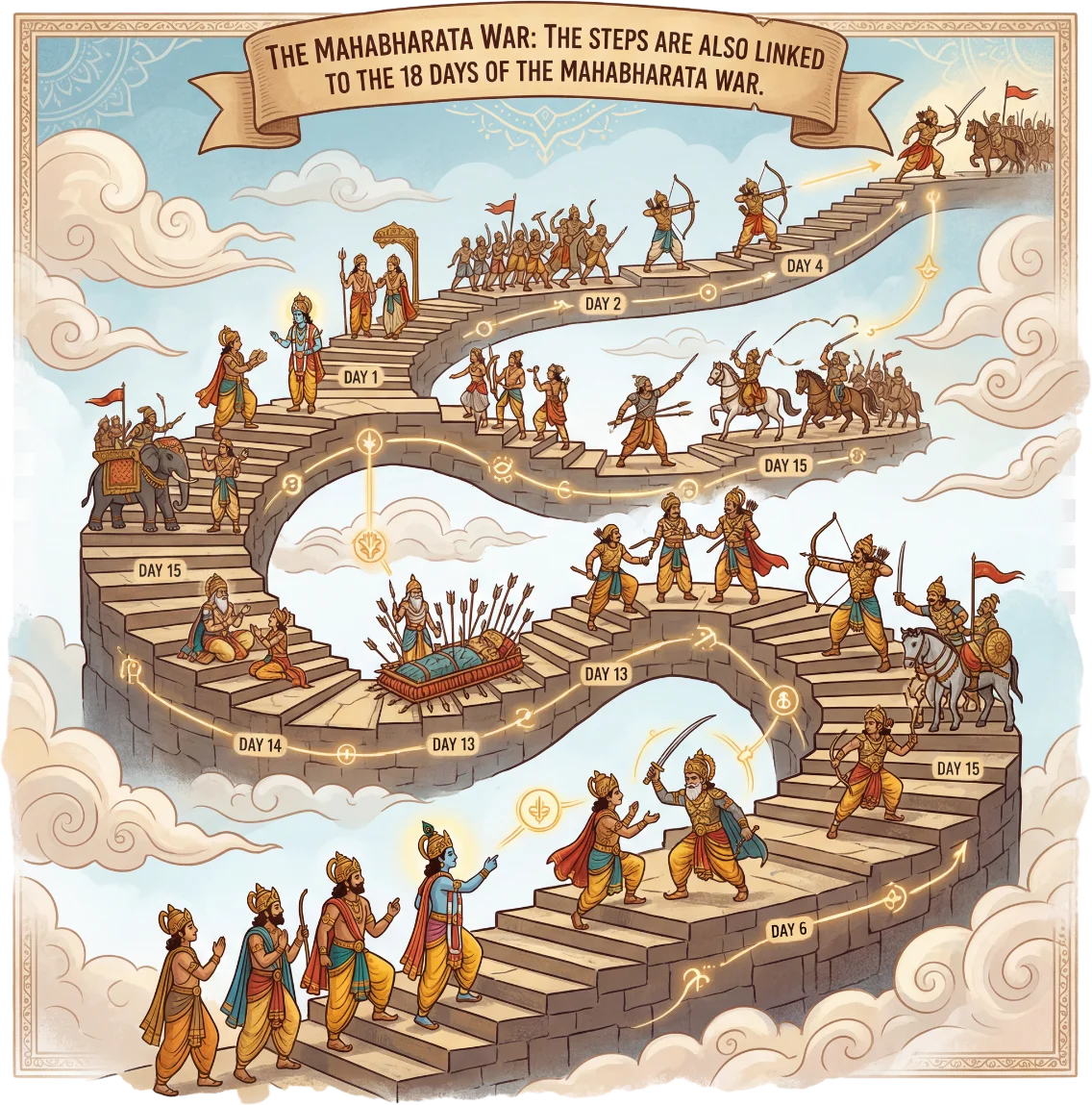
The Mahabharata
The Mahabharata War: The steps are also linked to the 18 days of the Mahabharata war.
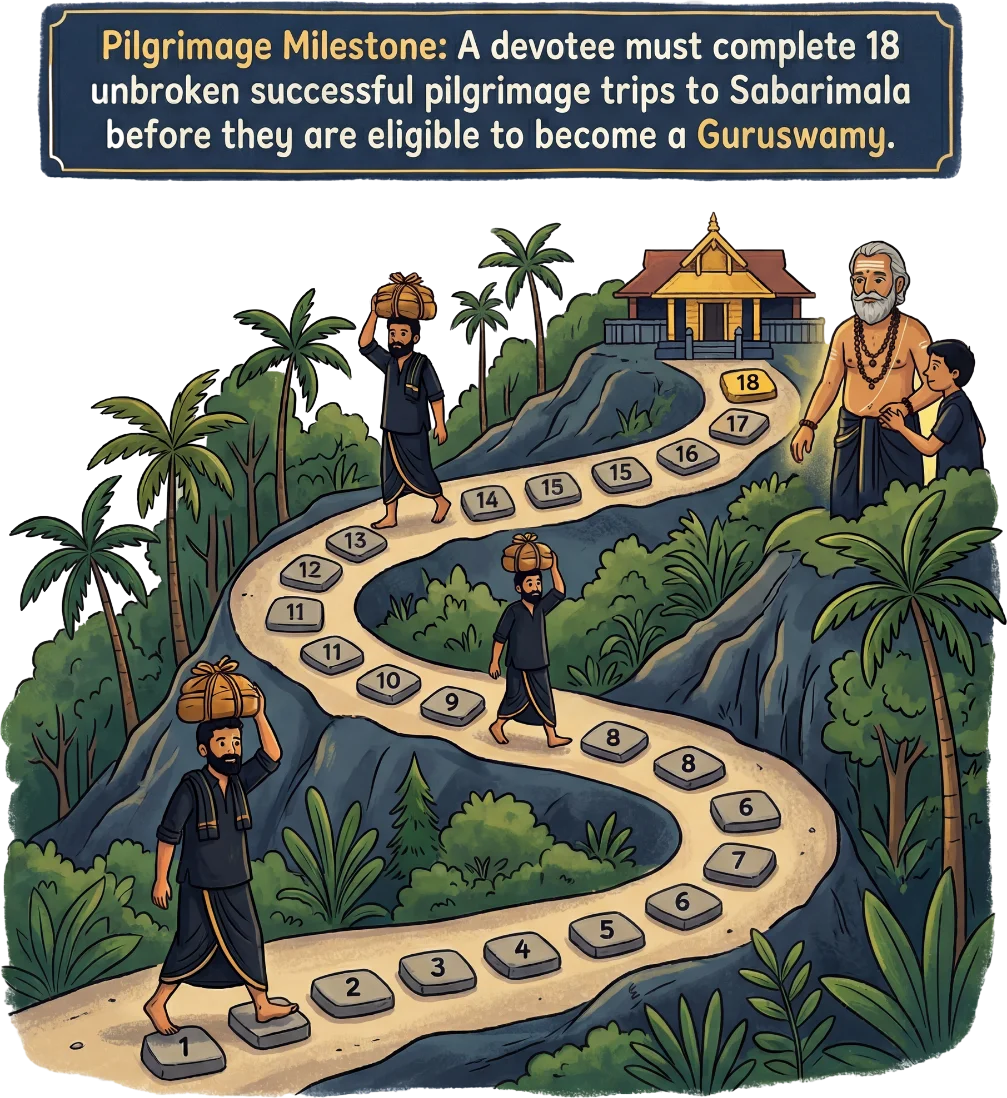
The Milestone
Pilgrimage Milestone: A devotee must complete 18 unbroken successful pilgrimage trips to Sabarimala before they are eligible to become a Guruswamy.
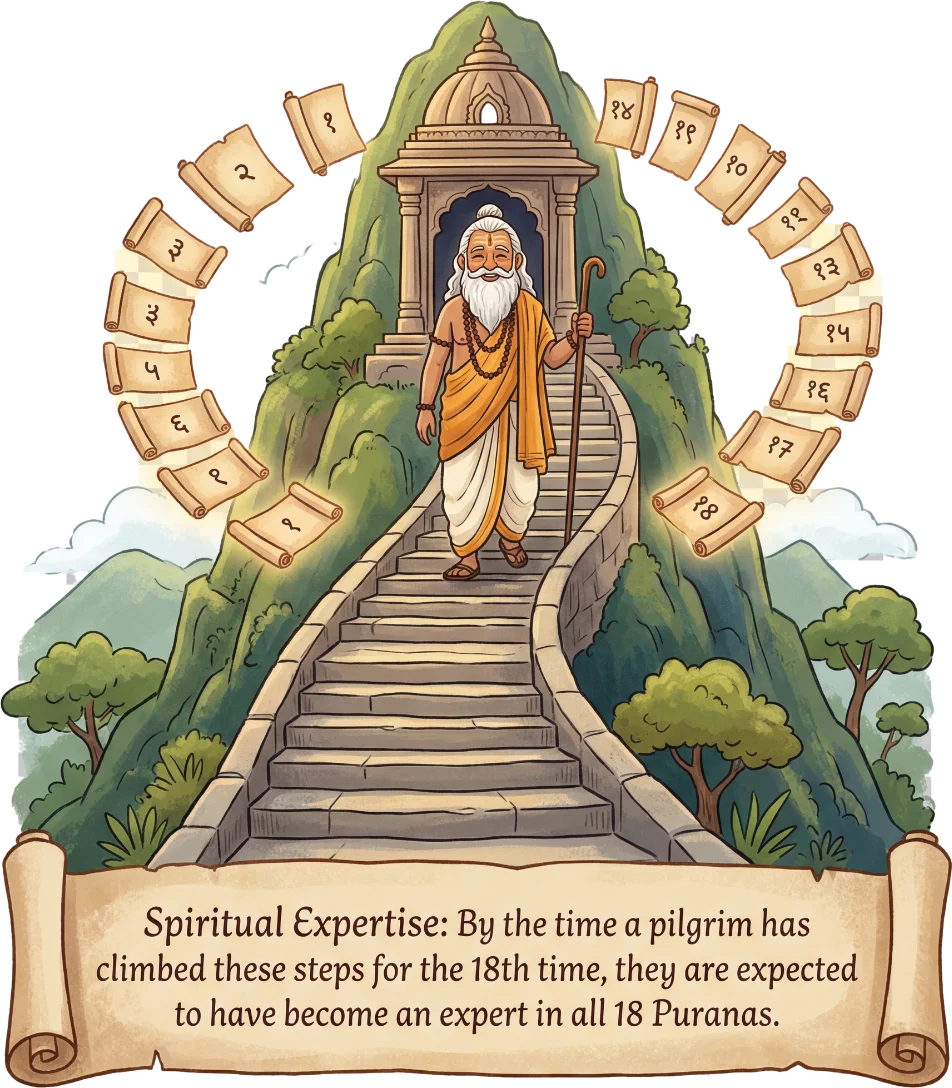
The Expertise
Spiritual Expertise: By the time a pilgrim has climbed these steps for the 18th time, they are expected to have become an expert in all 18 Puranas.
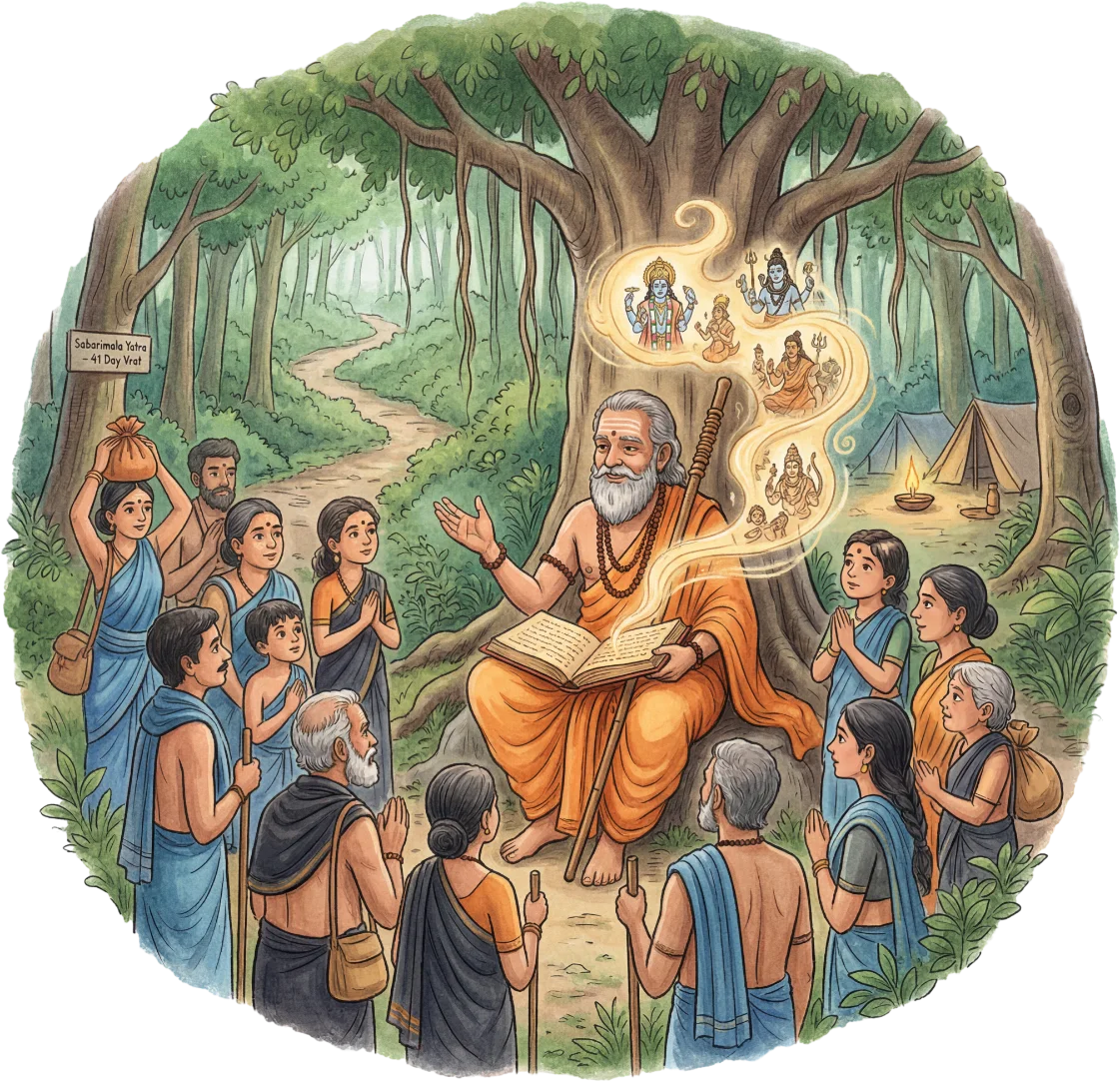
The Guruswamy
Leadership and Discourse: Only after completing 18 trips, a Guruswamy is permitted to lead a group of up to 108 pilgrims. During the trek and the 41-day vow (vrat), the Guruswamy narrates these Puranas and provides spiritual discourses to those they lead.
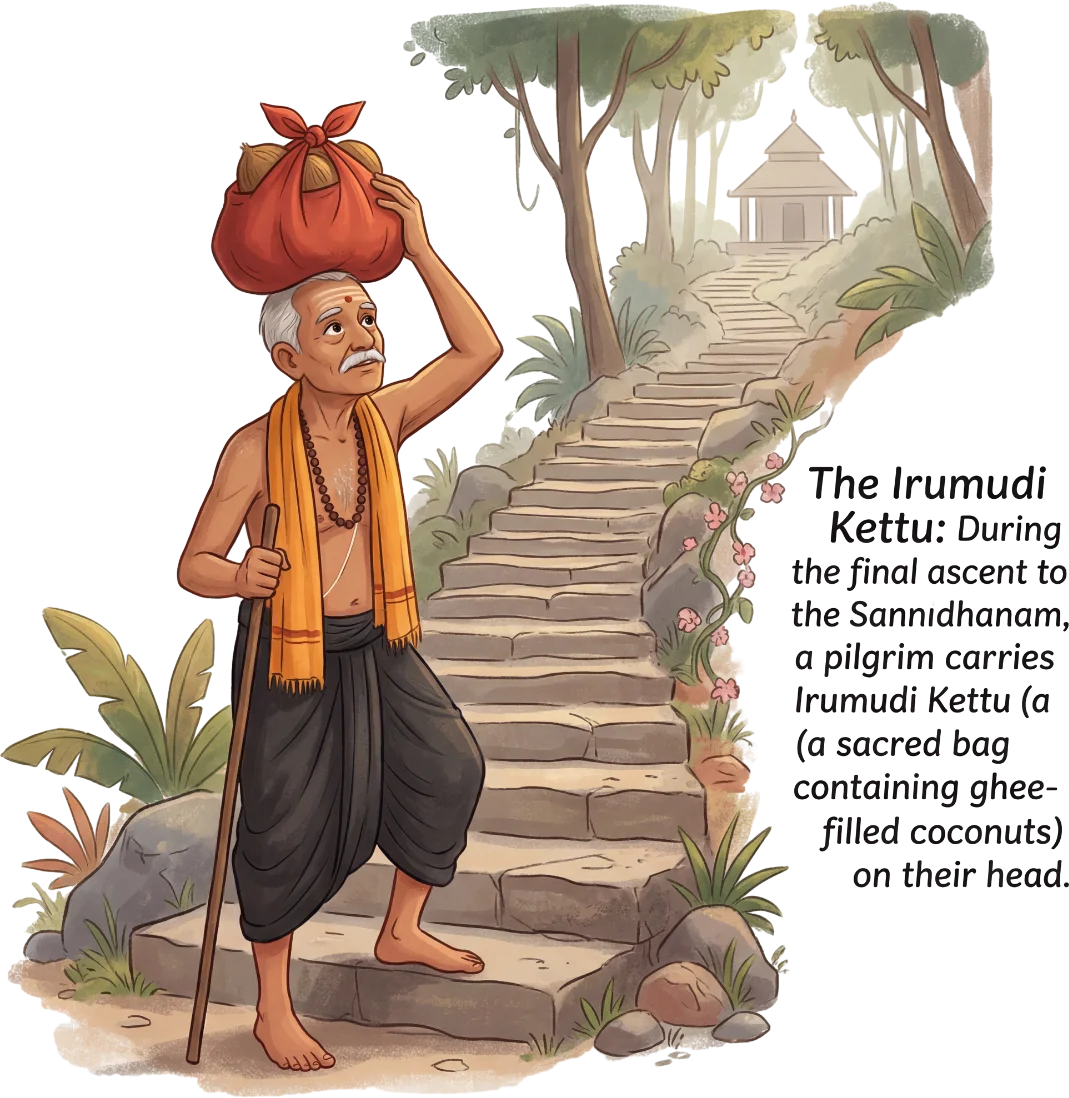
The Irumudi Kettu
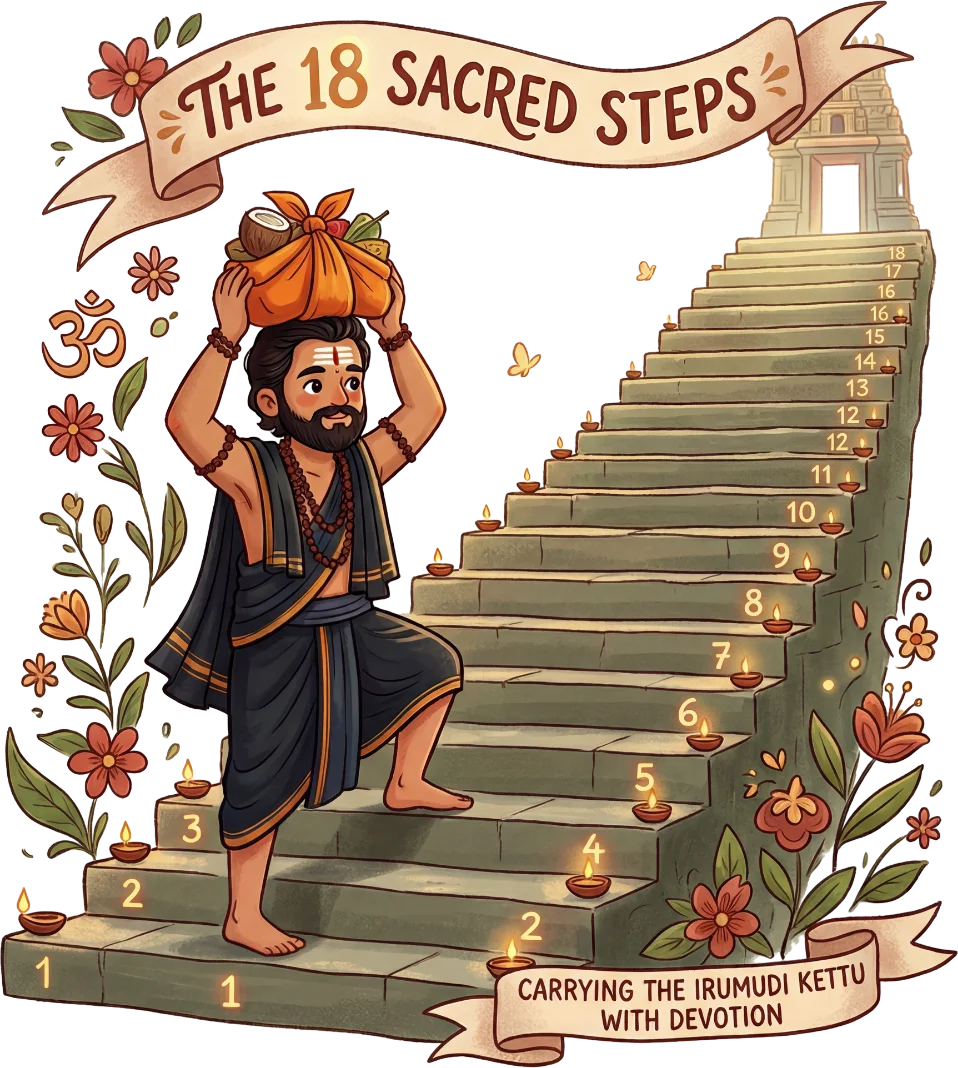
The Irumudi Kettu: During the final ascent to the Sannidhanam, a pilgrim carries the Irumudi Kettu (a sacred bag containing ghee-filled coconuts) on their head.
The Sacred Rule
Traditional rules dictate that the pilgrim must not allow the Irumudi Kettu to touch the ground until they have successfully climbed all 18 steps.
Mount Meru
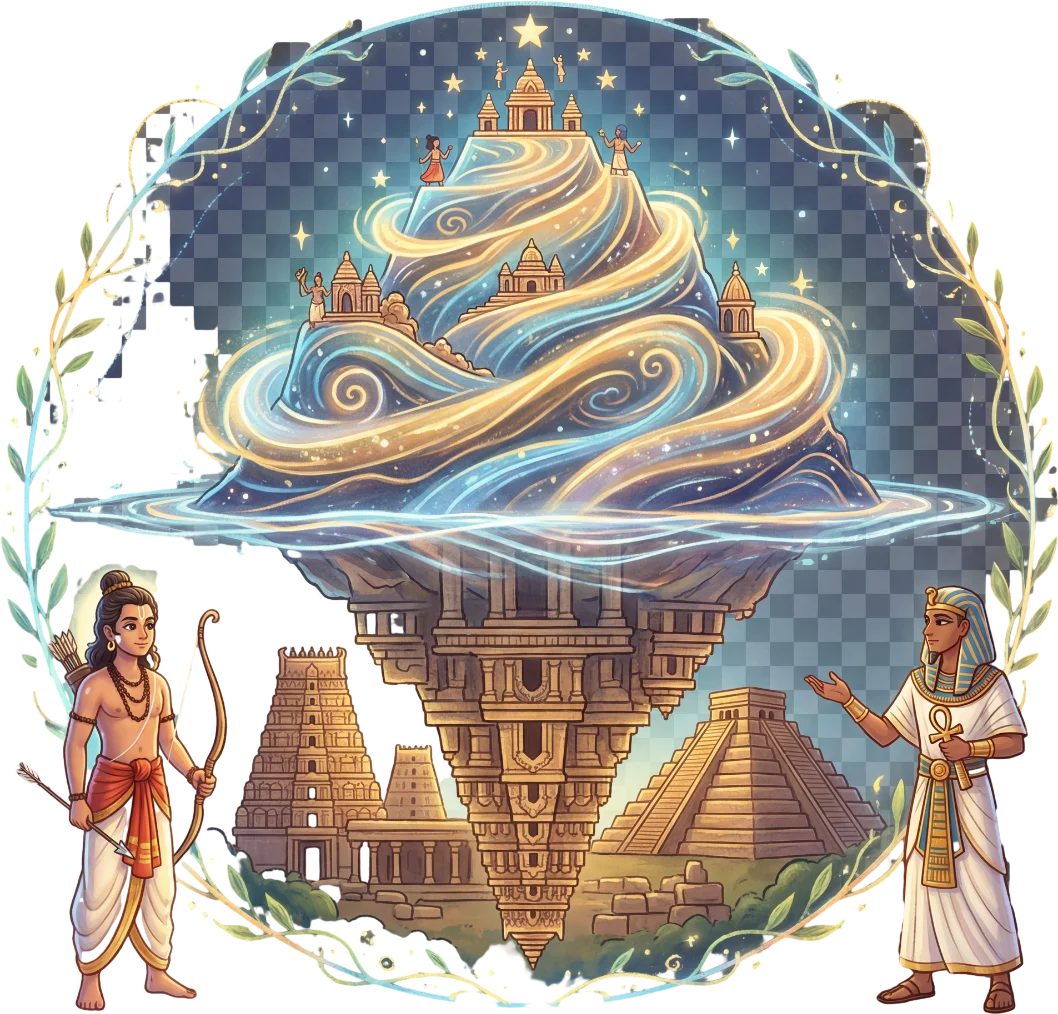
Mount Meru is physically mirrored in the monuments built by Ayyappa / Imhotep.
The King's Chamber
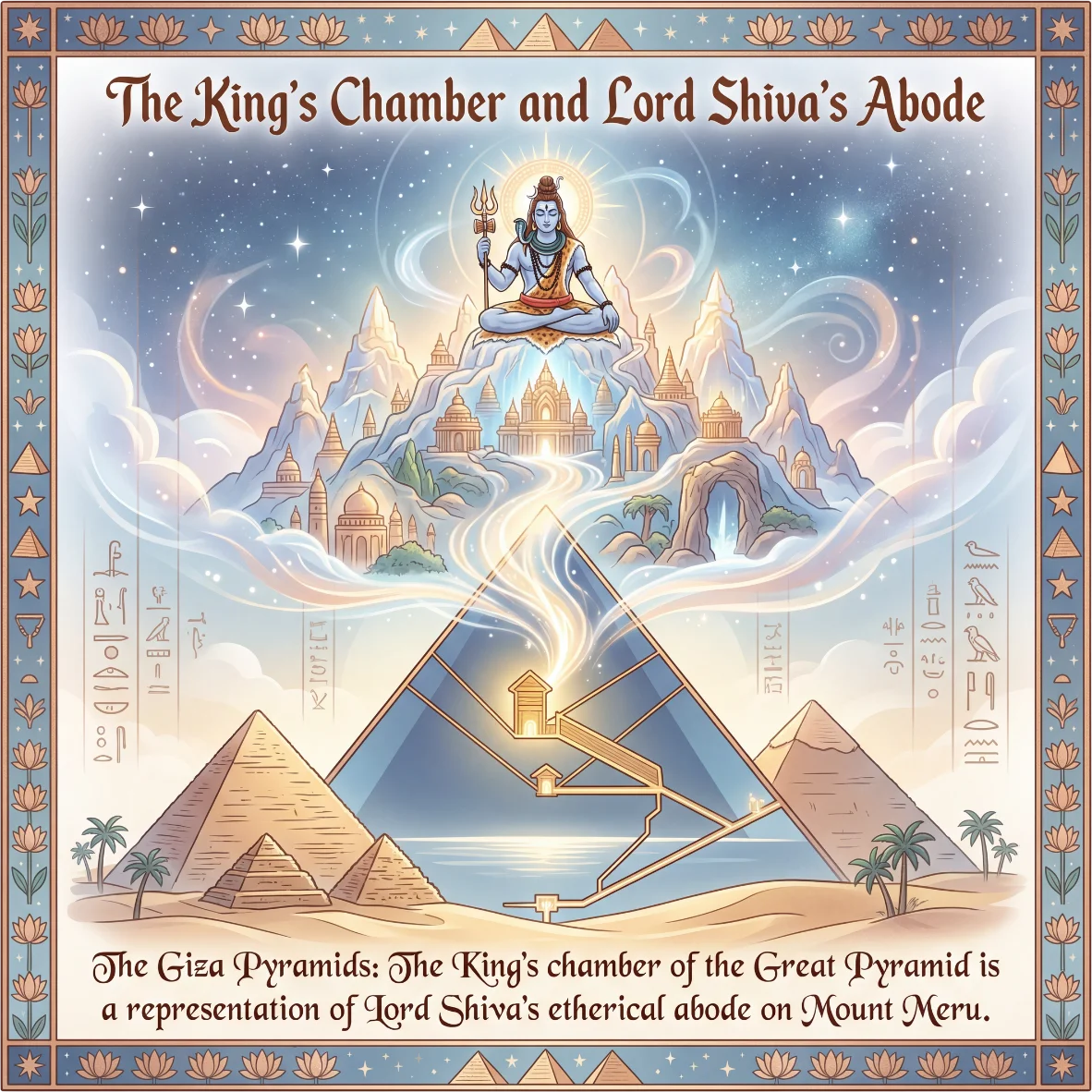
The Giza Pyramids: The King's chamber of the Great Pyramid is a representation of Lord Shiva's etherical abode on Mount Meru.
Divine Geometry
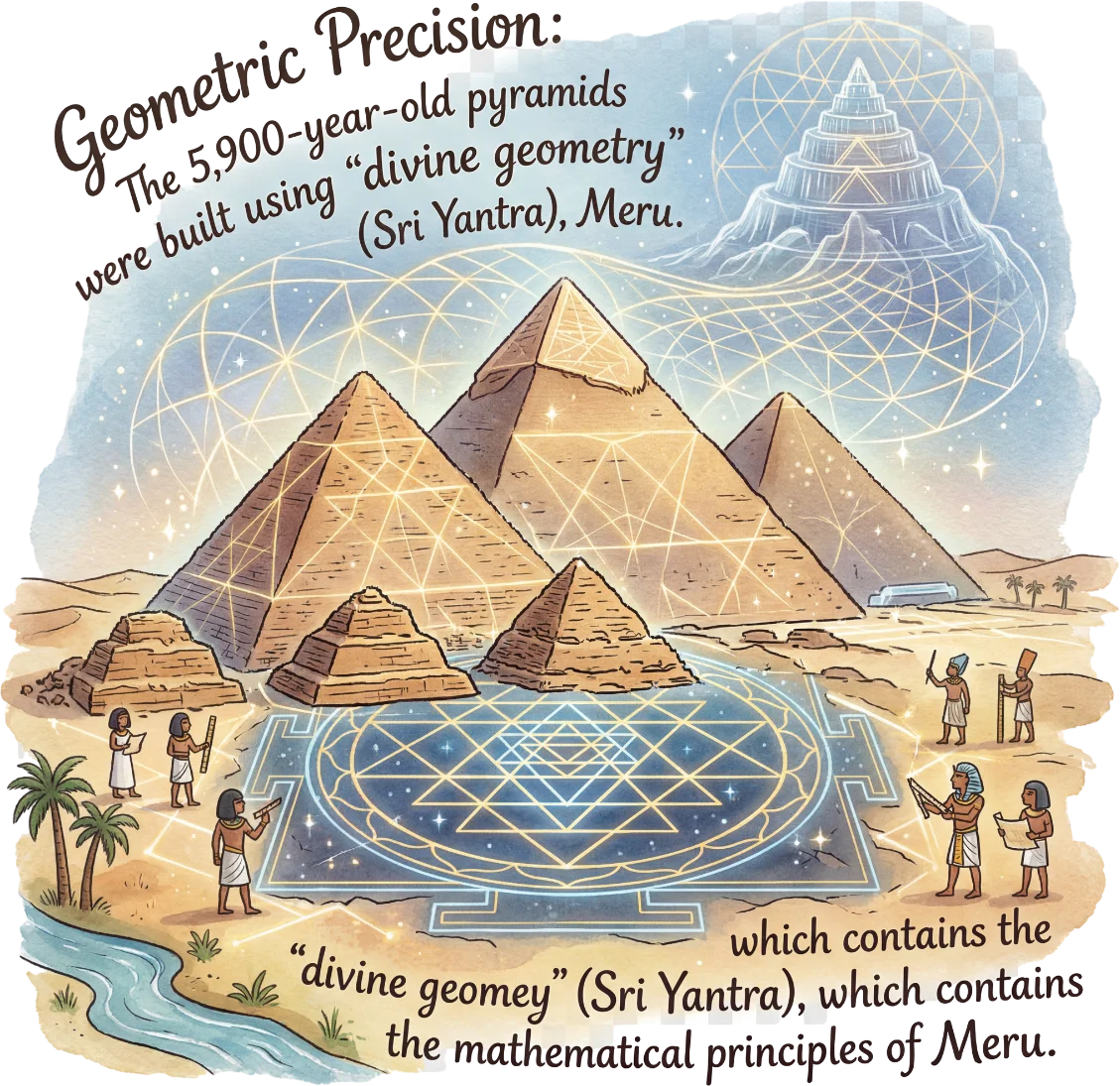
Geometric Precision: The 5,900-year-old pyramids were built using "divine geometry" (Sri Yantra), which contains the mathematical principles of Meru.
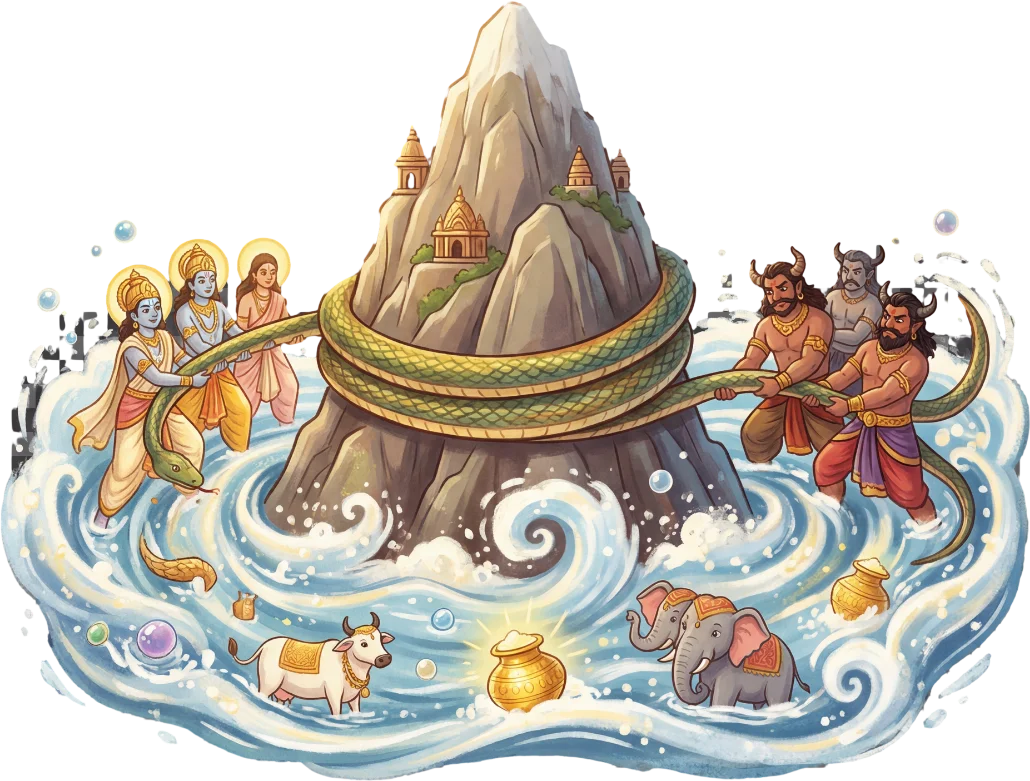
The Cosmic Churn
Mount Meru is the "Churning Rod" of the Samudra Manthan (the Churning of the Cosmic Ocean).
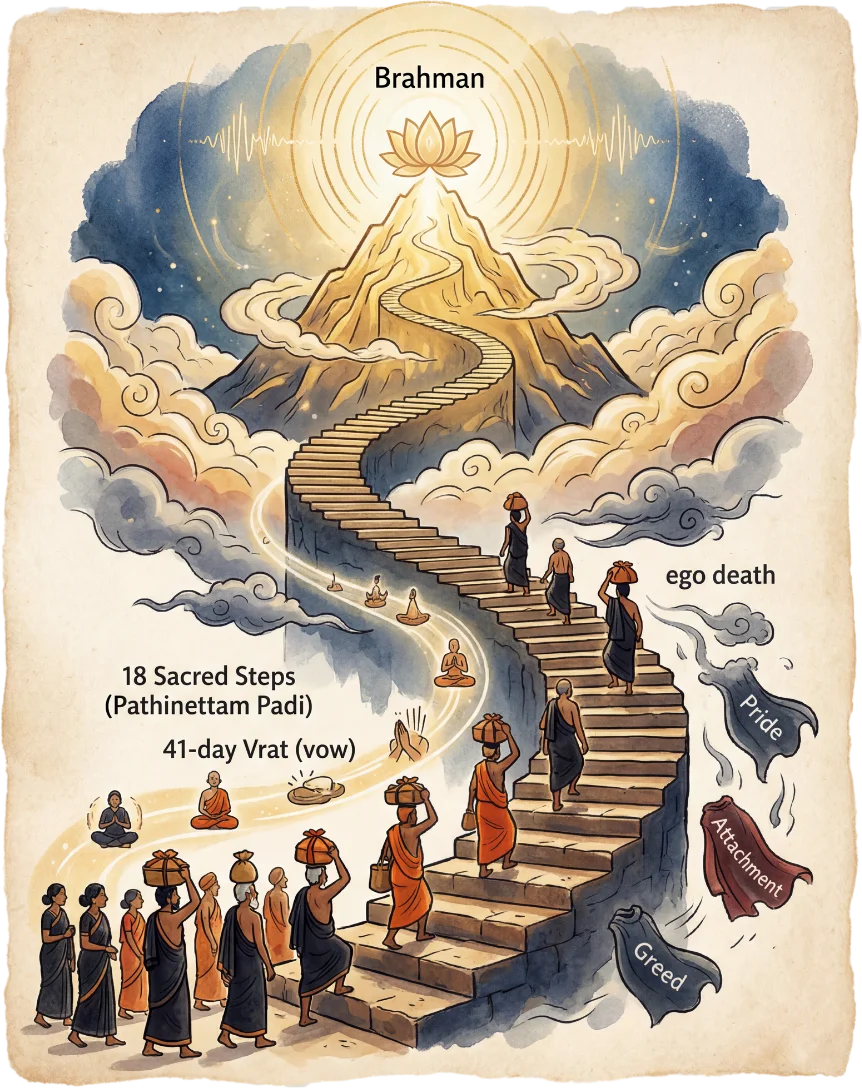
The Heavenly Ascent
Sabarimala Pilgrimage: The 18 steps of Sabarimala and the 41-day vow (vrat) are designed to facilitate a "heavenly ascent" or "ego death". This process mirrors the Soul's yearning to raise its frequency to the level of Brahman, the field represented by Meru's peak.